If you've been told you have a TMJ problem, or you suspect it but no one has confirmed it, you're probably in one of two camps: you have a stack of advice that doesn't agree with itself, or you've been told it's something you have to learn to live with. Neither is true. TMJ dysfunction is well-described in the literature, it's diagnosable, and most cases respond to treatment that targets the joint, the muscles around it, and the cervical spine together.
This page is the plain-language version. If you want the technical literature, the American Academy of Orofacial Pain publishes the consensus diagnostic criteria; if you want a clinician, the consultation page is a click away.
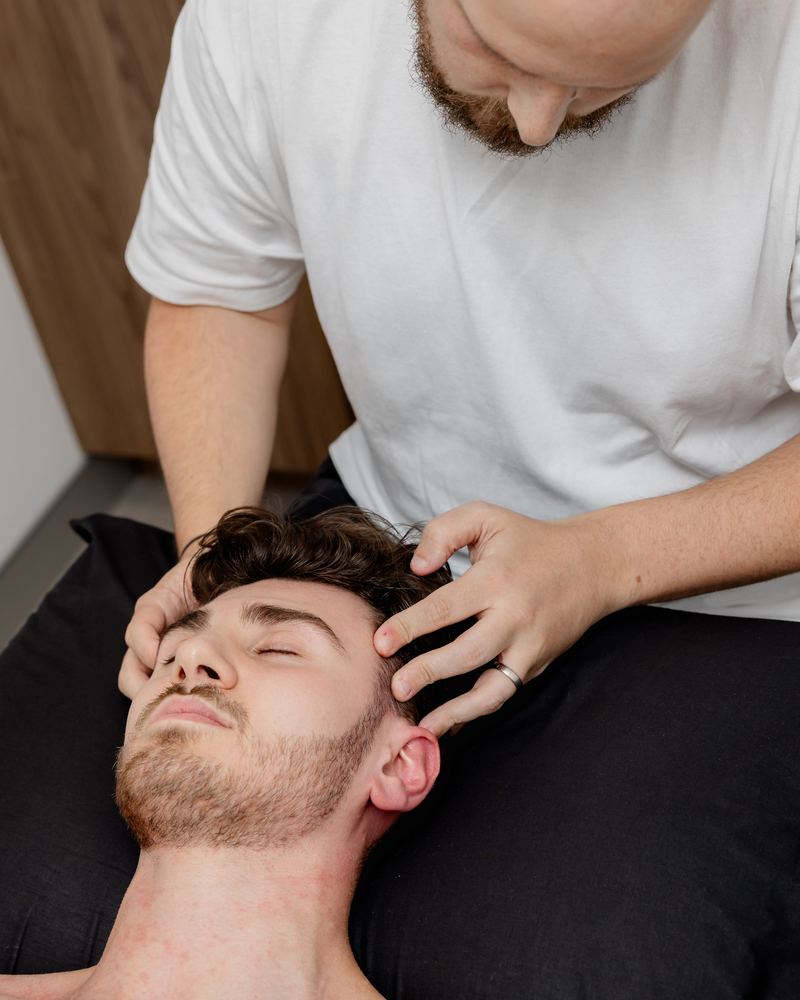
What is the TMJ?
The temporomandibular joint — TMJ — is the hinge that connects your lower jaw to your skull, just in front of each ear. You have two of them, one on each side. They work together every time you talk, chew, swallow, or yawn — which adds up to roughly 2,000 cycles a day for most people.
Each TMJ has three things doing work at once: the joint itself (the bony hinge), a small disc of cartilage that sits between the bones, and the muscles that move and stabilise the jaw. When any one of these stops doing its share of the work, the others compensate — and that's usually where dysfunction starts.
TMJ vs TMD vs TMJD — what's the difference?
You'll see all three terms used, often interchangeably, and that's where the confusion starts.
- TMJ is the anatomical name of the joint itself. Saying "I have TMJ" is technically saying "I have a jaw joint" — which everyone does.
- TMD stands for temporomandibular disorder — the umbrella term for any condition affecting the joint, the muscles, or the disc.
- TMJD is a hybrid that means the same thing as TMD. Different countries and clinical groups use different acronyms.
In this practice, I use "TMJ dysfunction" or "TMD" to mean the same thing: a problem with how the jaw mechanism is working. The naming convention doesn't matter much. The diagnosis does.
Symptoms that point to TMJ dysfunction
The classic presentation is jaw pain — but most people don't arrive with just jaw pain. The joint shares neurology with the upper neck, the temples, and the inner ear, which is why symptoms travel.
If three or more of these are familiar, TMJ dysfunction is worth ruling in or ruling out properly. A single click in an otherwise pain-free jaw isn't usually a problem. A combination of symptoms — clicking and headache and ear fullness — usually is.
What causes it
There's rarely one cause. Most TMJ presentations sit at the intersection of a few drivers:
1. Bruxism (clenching and grinding)
Often unconscious, often sleep-related. Bruxism overloads the muscles of mastication and the joint disc itself. Splints can manage symptoms but don't address the upstream driver.
2. Stress and the autonomic nervous system
Sustained sympathetic-nervous-system activation increases jaw muscle tone. Patients often notice their jaw tightens during stressful periods even when they're not consciously clenching.
3. Cervical spine dysfunction
The upper cervical spine and the trigeminal nerve share neurology. Restriction or irritation in the upper neck — from posture, from a previous whiplash, from desk work — can present as jaw symptoms.
4. Trauma
Direct blow to the jaw, whiplash, dental procedures requiring extended mouth opening, prolonged intubation. Sometimes the trauma was years ago and the connection isn't obvious to the patient.
5. Sleep-disordered breathing
People with airway issues often clench at night. Treating the jaw without considering airway can plateau quickly. This is one reason a multidisciplinary approach matters.
6. Joint and disc pathology
Disc displacement, capsulitis, degenerative changes, and inflammatory conditions like rheumatoid arthritis. These need imaging or specialist input to diagnose properly.
Most cases I see are a combination of cervical spine restriction, muscle hyperactivity from bruxism, and a stress-driven autonomic component. Targeting only one of those rarely works.
Why TMJ is so often misdiagnosed
The honest answer is that no single profession owns it. Dentists see the bite. ENT specialists see the ear symptoms. Physiotherapists see the muscle component. Neurologists see the headaches. GPs hear about all of it but rarely have time to assess for TMJ specifically.
The result is patients who get sent in a circle: "your bite looks fine, see an ENT" → "your hearing's normal, see a physio" → "your neck's tight, see a neurologist" → "your scan's clear, manage the stress."
Each clinician is right within their lane. The lane just isn't wide enough on its own. Which is why clinicians who train through the orofacial pain academies — ANZAOP in Australia and New Zealand, AAOP in the US — work specifically across these boundaries.
When to see someone (and who)
Consider booking an assessment if:
- You've had jaw pain, clicking with pain, or jaw locking for more than four weeks
- Your headaches don't respond to standard treatment and your jaw feels tight
- You've been told to "manage" symptoms that are actively limiting your life
- You've had a splint for six months and you're no better
- Your ear symptoms (fullness, ringing, sensitivity) come and go with jaw use
If you're not sure whether you should see a chiropractor, a dentist, or a specialist, the simplest first step is an assessment with someone who works across the field. I can usually tell you within one consultation whether your case is in scope or whether someone else is the right starting point. The consultation page is the place to book.
How I assess TMJ dysfunction
A proper TMJ assessment isn't complicated, but it does take time. In a first consultation, I'll typically:
- Take a full history — including when symptoms started, what makes them better or worse, what's already been tried, sleep patterns, stress, history of any trauma to the head or neck
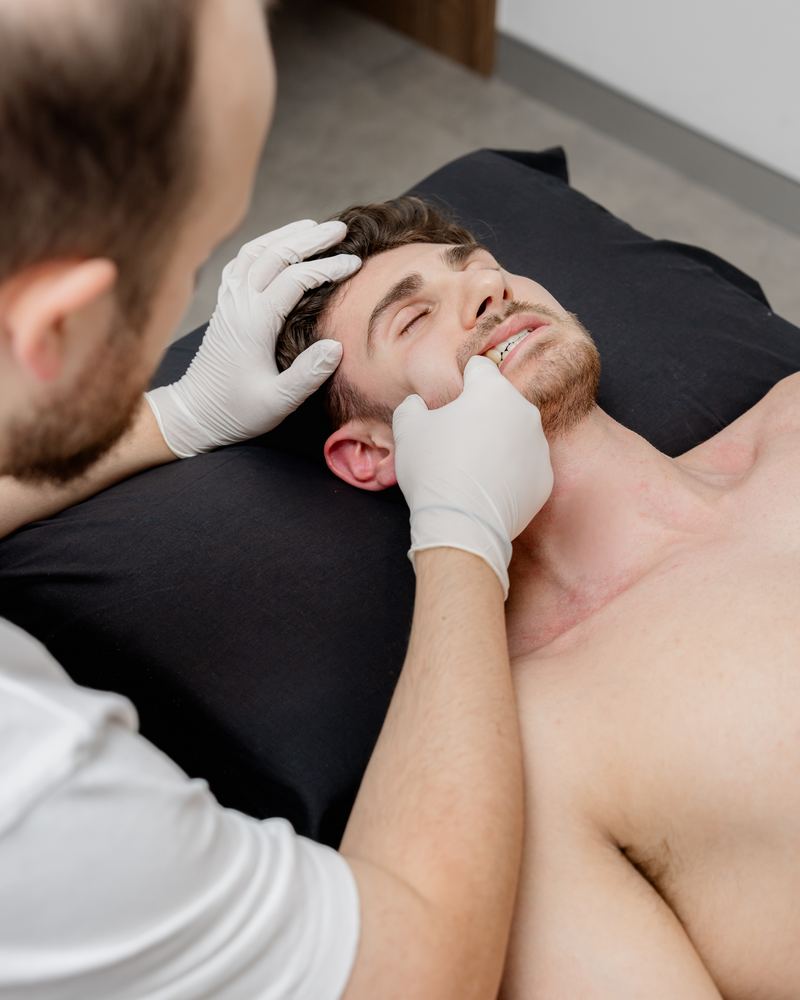
- Examine the jaw's range of motion, deviation patterns, and any joint sounds during opening and closing
- Palpate the muscles of mastication — masseter, temporalis, pterygoids — for tenderness and trigger points
- Assess the cervical spine, particularly the upper segments that share neurology with the jaw
- Screen for red flags that need referral on (suspected fracture, malignancy, rheumatological involvement, neurological deficit)
- Talk through what I think is driving your case and what a treatment plan would look like — including realistic expectations
If I think your case needs imaging, a dentist, or a specialist before I'm the right person, I'll say so on the first visit. That's part of the job.
How TMJ is treated
Treatment depends on what the assessment finds. The protocol I use combines four tools, applied in the sequence the assessment dictates:
- High-level laser therapy (photobiomodulation): for the joint and surrounding muscles, particularly where there's an inflammatory component
- Dry needling: for trigger points in the masseter, temporalis, and pterygoids when those are driving pain
- Manual therapy: mobilisation of the jaw and the upper cervical spine, soft-tissue work on the muscles of mastication
- Neurological rehabilitation: targeted retraining for cases with a cervicogenic or post-concussive component
It's not a fixed protocol — it's a set of tools used in the combination and order the assessment finds. There's more on the protocol on the main TMJ Chiro page, including the patient process and timelines.
Realistic expectations
Most people see some change in symptoms within the first 2-4 sessions. Full resolution depends heavily on what's driving the case — a recent presentation with a clear cervical component usually responds faster than a case that's been chronic for years with multiple drivers.
Some cases will need ongoing management rather than a discrete "cure." Some won't fully respond and will need referral to a dentist or surgeon for a different approach. I'll be honest about which category yours falls into as we go.